2026-09-10 · Mike Ellison
How Tree Roots Trigger Sewer Backups in Old Littleton Homes
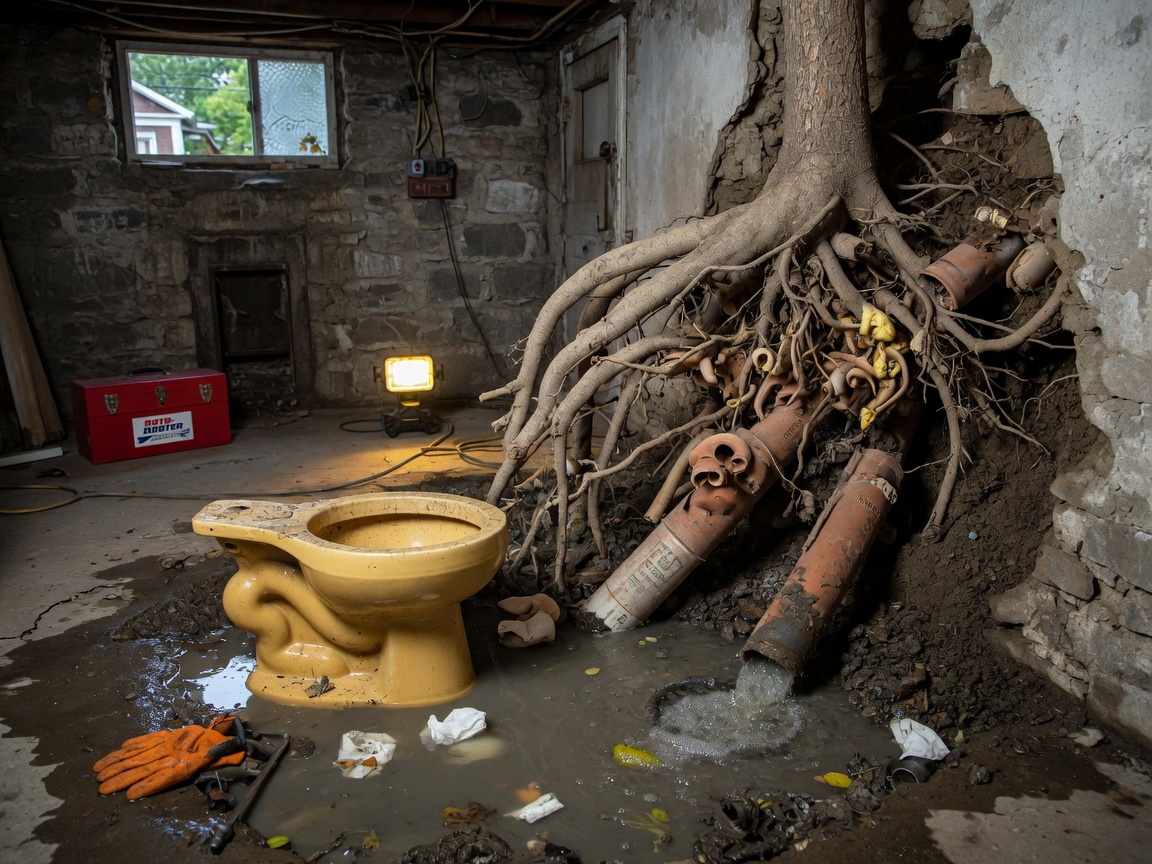
Tree roots trigger sewer backups in old Littleton homes by forcing their way into joints and cracks of clay or cast-iron pipes that have aged 50 years or more. Homes in Historic Littleton and Downtown Littleton commonly have these materials, and the county's four distinct seasons create repeated stress points where roots find water.
Why Historic Littleton Homes Face Higher Risk
Littleton's older housing stock in neighborhoods such as Historic Littleton, Downtown Littleton, and Sterne Park was built with clay tile or cast-iron sewer lines that develop hairline cracks over decades. These pipes sit 3 to 6 feet underground where mature trees planted near sidewalks and foundations send roots in search of moisture. The semi-arid climate keeps soil dry for much of the year, so roots grow aggressively toward the consistent water source inside sewer pipes. Freeze-thaw cycles each winter expand those cracks further, giving roots an easier entry point. In contrast, newer subdivisions in Highlands Ranch or Englewood usually have PVC lines with tighter joints that resist intrusion longer.
How Roots Penetrate and Block Flow
Roots enter through the smallest openings at pipe joints or where ground settling has created gaps. Once inside, they absorb water and grow thicker, eventually forming a dense mat that traps toilet paper, grease, and solids. In Bowles and Columbine, many homes sit on lots with large cottonwoods or maples whose roots can travel 20 to 30 feet horizontally. The low-humidity summers intensify root growth because trees must reach deeper for reliable moisture. A single root mass the size of a softball can reduce flow enough to cause backups during heavy rain or multiple household uses. Over time the pressure can crack the pipe completely, turning a simple clog into a full line failure.
Seasonal Patterns That Worsen Root Damage
Spring thaw in Arapahoe County sends extra water into the ground and softens soil around pipes, allowing roots already inside to expand quickly. Summer drought then drives roots farther along the line in search of the steady flow from household drains. Fall leaf drop adds organic debris that combines with root mats to create sudden blockages. Winter freezes contract and expand the ground, widening existing cracks and giving new root tips access. These cycles repeat every year, so homes near Hudson Gardens or Sterne Park often see problems surface between March and November when tree activity peaks.
Practical Steps for Littleton Homeowners
Schedule a sewer camera inspection to locate root entry points before they cause a backup. Property owners in Columbine and Wolhurst can also review the related guide on what Littleton homeowners pay for sewer camera inspections. When roots are confirmed, sewer root removal clears the line without excavation in many cases. Regular maintenance every 18 to 24 months prevents recurrence, especially for homes within 30 feet of large trees. Checking cleanouts after heavy rain or during spring thaw catches early signs before sewage reaches the basement.
When to Call for Main Sewer Backup Repair
If multiple fixtures back up at once or sewage appears in floor drains, contact a plumber who serves Littleton directly. Homes in Southpark and near Littleton Town Hall often share older main lines that multiple properties rely on, so root issues can affect neighbors simultaneously. Prompt camera work and targeted root removal protect both the home and the surrounding soil from contamination.