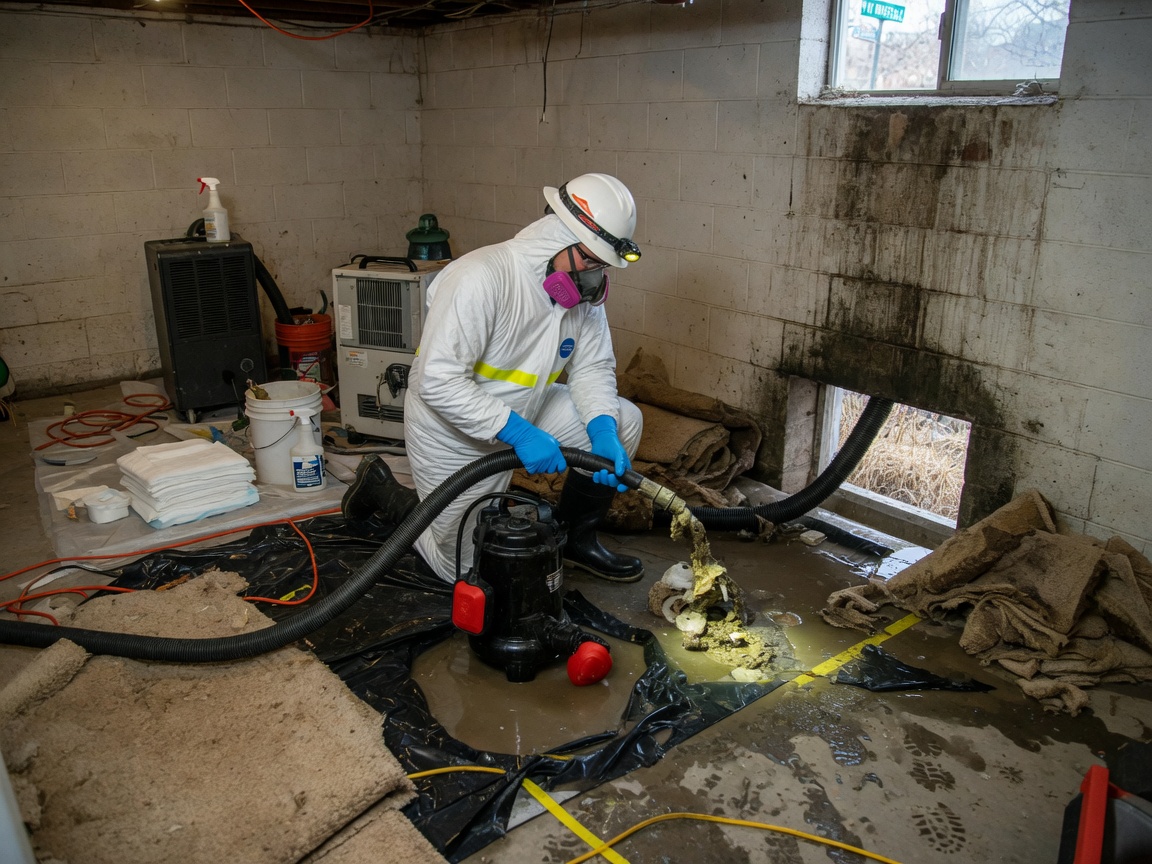
Littleton homes built before the 1970s in Historic Littleton and around the Littleton Museum often have clay or cast-iron laterals that crack from shifting Arapahoe County soils. When a backup reaches finished basements, crews must first isolate the affected zone to prevent cross-contamination into HVAC returns or adjacent rooms. Low-humidity air helps surface drying but can mask moisture trapped behind baseboards or under tile, so moisture meters are used on every wall cavity before any reconstruction begins.
Spring snowmelt and summer thunderstorms raise the water table near Sterne Park and Wolhurst, pushing roots deeper into joints. Technicians map the line with a camera before extraction because a single missed root ball can re-contaminate cleaned areas within days. Arapahoe County health rules require documented disposal of all extracted waste at approved facilities; crews carry manifests on every job to stay compliant.
In neighborhoods like Columbine and Southpark, slab-on-grade homes route cleanouts under driveways. Accessing these often means cutting concrete rather than digging through established landscaping, which changes both time and restoration scope. Odor control after cleanup relies on air scrubbers with activated carbon because the semi-arid climate keeps volatile compounds airborne longer than in humid regions.
Technician insight
In Littleton the thing that catches most people out with Sewage Backup Cleanup is the clay laterals under Historic Littleton homes. Tree roots from the mature plantings around Bemis Public Library and Sterne Park push through every spring thaw, and once water backs up it travels under the slab before homeowners notice. We always camera from the cleanout first because guessing the break point wastes time and money.
Backup After Spring Thaw In Columbine
A homeowner in Columbine noticed water rising in a basement utility sink after several days of snowmelt. Camera inspection showed roots blocking the clay lateral near the sidewalk. We extracted the wastewater, jetted the line clear, sanitized all contacted surfaces, and set drying equipment for three days until moisture readings normalized.
Sewage Backup Cleanup Services We Offer
✓Basement Sewage Extraction
Removes standing wastewater from finished and unfinished basements using submersible pumps and containment barriers to protect unaffected areas.
✓Biohazard Containment
Sets up negative-air zones and seals HVAC intakes to stop pathogens from migrating into living spaces during cleanup.
✓Floor and Wall Drying
Uses commercial dehumidifiers and air movers on concrete, drywall, and subfloors after extraction to prevent hidden mold growth.
✓Sanitization and Disinfection
Applies EPA-registered disinfectants to all contacted surfaces and follows with ATP testing to verify bacterial reduction.
✓Carpet and Flooring Removal
Safely lifts and disposes of saturated carpet, pad, and laminate while documenting square footage for insurance claims.
✓Odor Elimination
Deploys hydroxyl generators and activated-carbon filtration to neutralize sewage odors in older Littleton homes with tight construction.
Sewage Backup Cleanup Cost in Littleton, CO
| Service | Typical Range | What Affects It |
|---|---|---|
| Initial Assessment And Camera | $150–$300 | Includes line locate and written findings |
| Sewage Extraction | $400–$900 | Varies with gallons removed and floor type |
| Sanitization Package | $350–$650 | Disinfection plus ATP verification |
| Concrete Access Cutting | $250–$500 | Required for slab cleanouts in Southpark homes |
Ranges are typical for Littleton, CO and confirmed with an exact written quote before any work starts.
How it works
- 1
Site Assessment
Technician arrives, locates the cleanout, runs a camera through the line, and identifies the backup source while noting any nearby tree roots common in Bowles and Columbine.
- 2
Containment Setup
Plastic barriers and negative air are established to isolate the affected zone from the rest of the home before any water is moved.
- 3
Extraction And Removal
Standing water is pumped out, saturated materials are bagged, and the line is jetted to clear remaining debris.
- 4
Sanitization And Drying
Disinfectants are applied, followed by monitored drying with moisture readings taken daily until levels match unaffected areas.
- 5
Final Verification
ATP testing and odor checks confirm the space is safe; a written report is left for the homeowner and any insurance adjuster.
Pricing
Upfront quotes after on-site assessment; cost depends on volume, access, and materials affected.